Scientists also search for proxy data clues under the earth. Stalagmites, stalactites, or flowstones found in caves have the scientific name of speleothems. Speleothems, like corals, can be analyzed for certain forms or isotopes of oxygen found in the calcium carbonate present to determine relative temperature and rainfall amounts that occurred in the past.
Because under certain conditions speleothems increase in size at nearly the rate that water drips through a cave, researchers can use what they learn about water flow rates in a specific cave to interpret their isotope data. This data gives them a picture through time of how water was falling at the surface above the cave.
In the longer term, isotope studies in caves give climate scientists data they can use to confirm large shifts in climate, such as changing circulation patterns in the atmosphere.
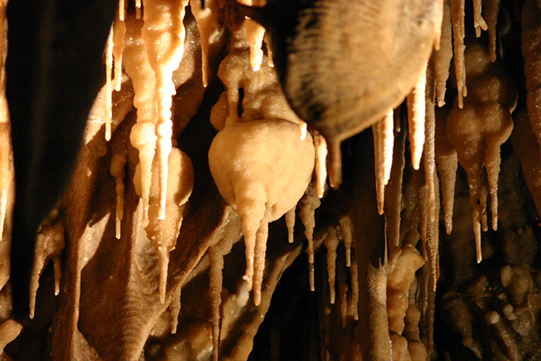
Speleothems in Great Basin National Park, Nevada.