In addition to indirect or proxy data, climate scientists also study historical documents such as farmers' logs, travelers' diaries, newspaper accounts, letters, journal entries, and other written records. These all can contain a large amount of climatic information. Even paintings and drawings can provide crucial evidence. When these data are properly evaluated, they can result in reliable quantitative and qualitative information about the past climate.
Historical records describing events such as planting dates of crops, rain and watering schedules, and harvest dates are known as phenological data. Phenology is the study of periodic plant and animal life cycle events and how they are influenced by seasonal and interannual (between years) variations in climate.
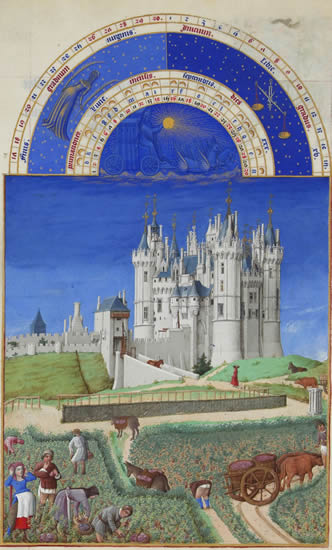
The painting to the right is a view of a grape harvest in France from the fiftenth century. Grape harvest dates, which are tied to temperatures, go back many hundreds of years in some parts of Europe.
A fifteenth-century view of the grape harvest from Les Très Riches Heures du Duc de Berry, a medieval book.