Plants that grew in the past and produced pollen are also a source of proxy climate data. Some species of plants produce pollen that is carried by the wind, and it falls everywhere. Pollen grains do not easily decompose, and if they fall in the right place for preservation, like a lake or a bog, they turn into fossils. By collecting samples over a large area, researchers develop a more regional or global climate understanding.
By studying different species of pollen, such as those pictured below, scientists can track how frequently they appear in fossil samples over time. Such data gives researchers clues about what kinds of vegetation was growing in the area at the time the pollen fell to the ground. Because some plants only grow in certain climate conditions, knowledge of plant vegetation from the past gives scientists clues to climates from the past.
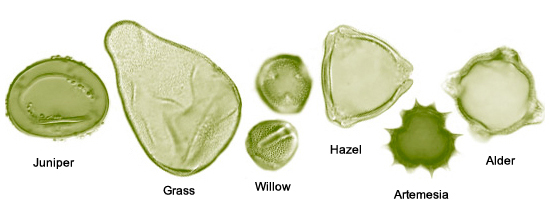
Microscopic views of pollen grains from species important to climate scientists.