The experiment's results left physicists stunned for many years; and some of them postulated that the ether, while real, simply wasn't observable.
Albert Einstein took a brave step forward with the publication of his theory of special relativity in 1906. In his theory, he argued that if there were no experimental proof of the ether, then the simplest explanation was that it did not exist. He went on to conclude that as there was no ether to slow down light, the speed of light was constant in a vacuum.
In his theory, Einstein developed a new understanding of space and time. He spent the next decade expanding and generalizing his theory and received the Nobel Prize in 1921.
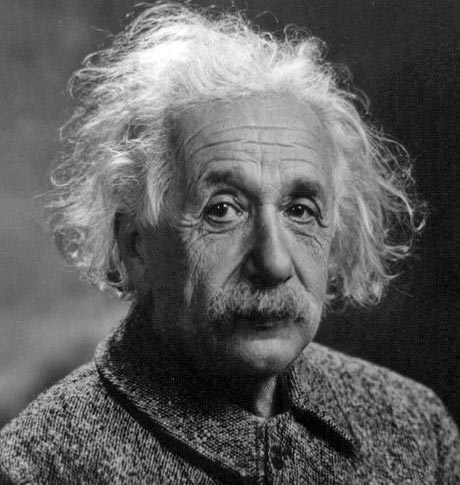 Albert Einstein